A 10-Year-Old R2-D2 Light
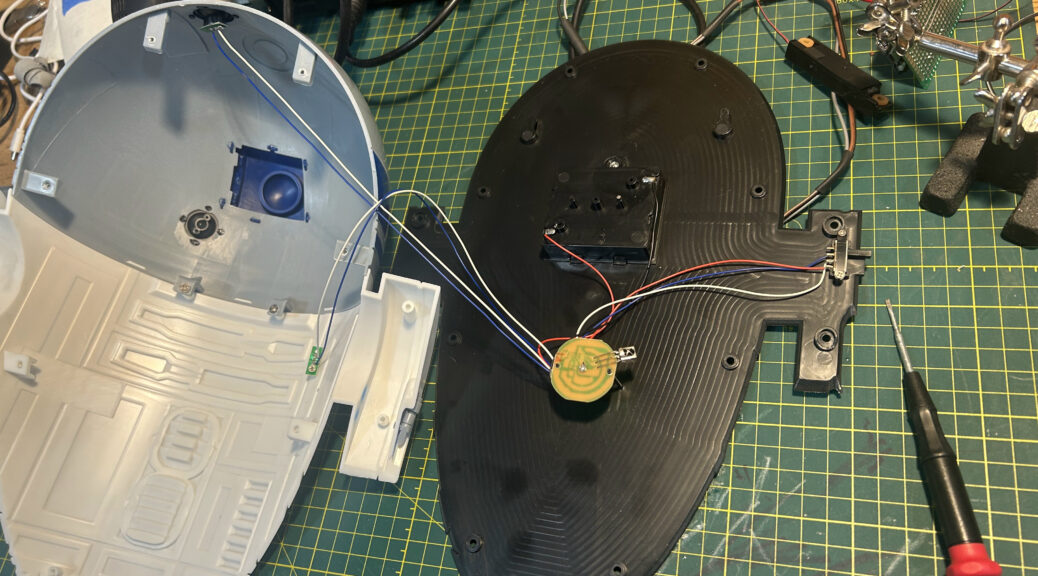
A decade ago, my wife gifted me what looked like a charming 3D Light FX Star Wars R2-D2 3D-Deco LED Wall Light (yes, that was the name). I never mounted it to a wall, I just had it resting on a shelf waiting for a good moment. When I finally decided to mount my R2-D2 light in 2025, I was disappointed by its basic capabilities. The internal inspection revealed a simple circuit board containing only an infrared sensor, two basic LEDs, and a manual switch. This minimalistic approach, while charming, left much to be desired.
Full Hardware Overhaul
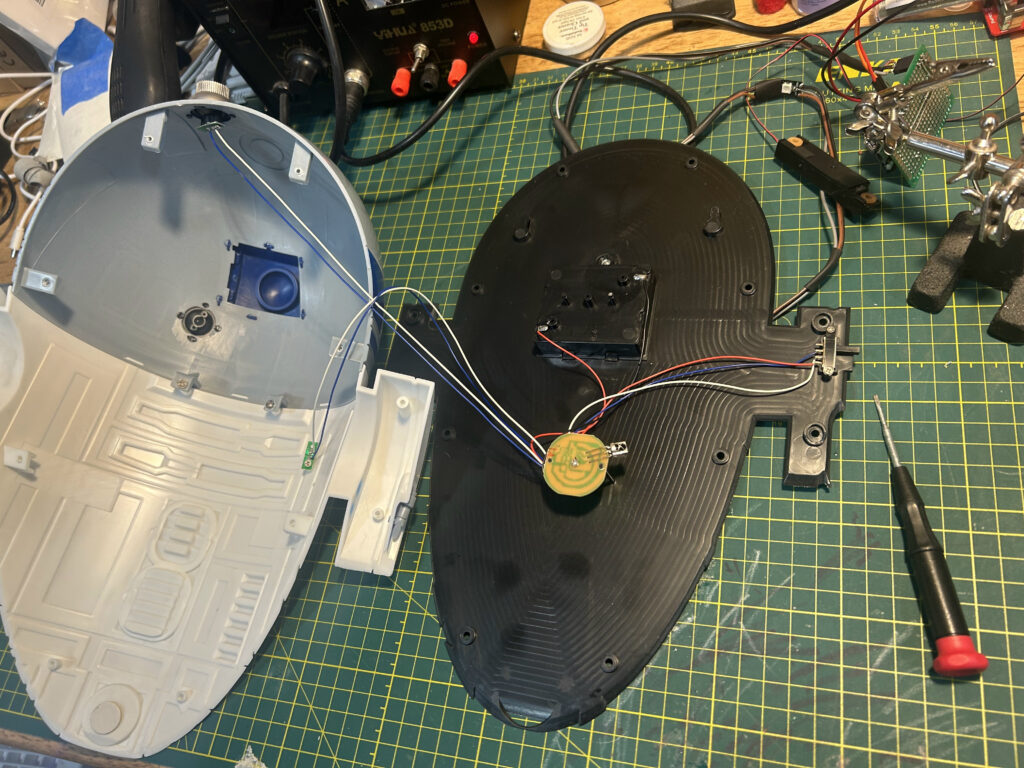
This wasn’t going to be a simple upgrade. The original board was not worth keeping, so I decided to gut it completely. Here’s what I installed:
LED System: Three WS2812B addressable RGB LEDs controlled by an ESP8266. These provide the classic R2-D2 with RGB lighting effects with full color control.
Audio System: A Adafruit Audio FX Sound Board with 2x2W amplifier and 16MB storage for WAV/OGG audio files. This handles the authentic R2-D2 sounds with crystal clear audio quality.
Smart Control: The ESP8266 runs custom Arduino firmware that connects to WiFi and listens for MQTT commands. This allows integration with my smart home ecosystem.
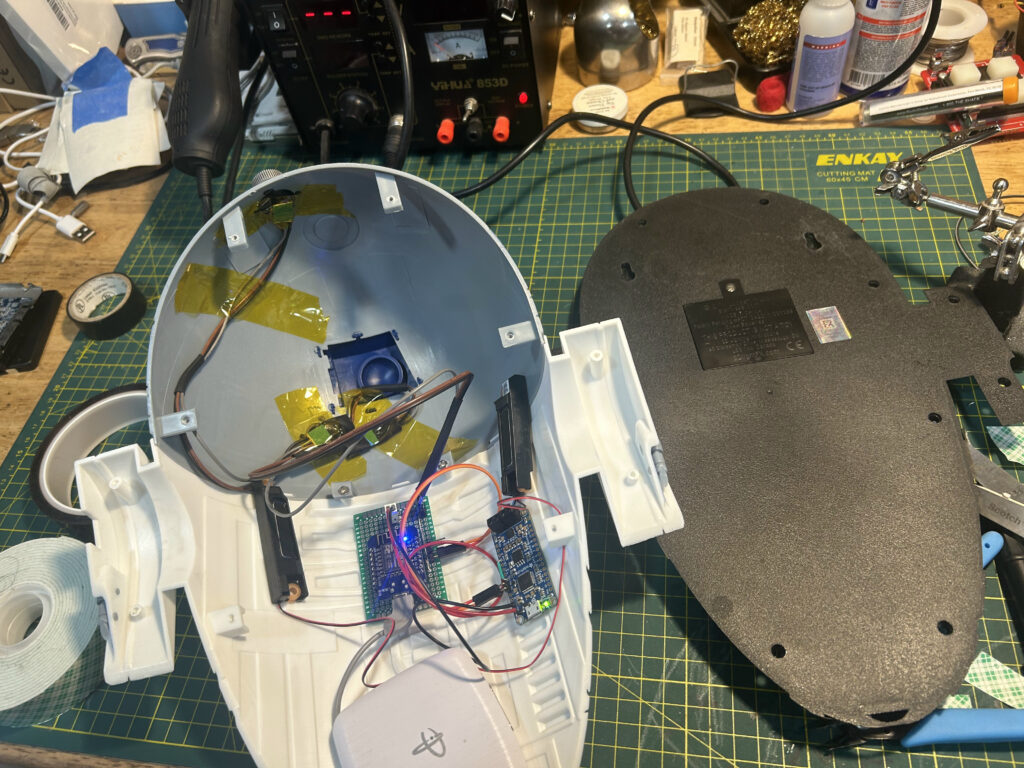
Implementation
The Arduino code running on the ESP8266 handles multiple tasks simultaneously:
- WiFi connection management
- MQTT protocol for external control
- WS2812B LED sequencing and color effects
- Audio trigger management through the Adafruit board
The Arduino code manages LED color sequences, intensity variations, and audio playback synchronization. Each sound trigger is carefully timed to match the visual effects, creating an immersive experience that captures the essence of the beloved astromech droid.
The true magic lies in the integration with my existing smart home infrastructure. Other systems can now trigger specific R2-D2 responses based on:
- Motion detection from security cameras
- Scheduled calendar events
- Random sound and lighting effect triggers to simulate R2-D2’s intermittent consciousness, due to damage.
What started as a simple wall light is now a sophisticated IoT device. The transformation took about a weekend of work, but the end result is worth every minute.
Hardware Summary:
- ESP8266 (NodeMCU clone)
- 3x WS2812B LEDs
- Adafruit Audio FX Sound Board + 2x2W Amp with 16MB of storage
- Standard USB power supply